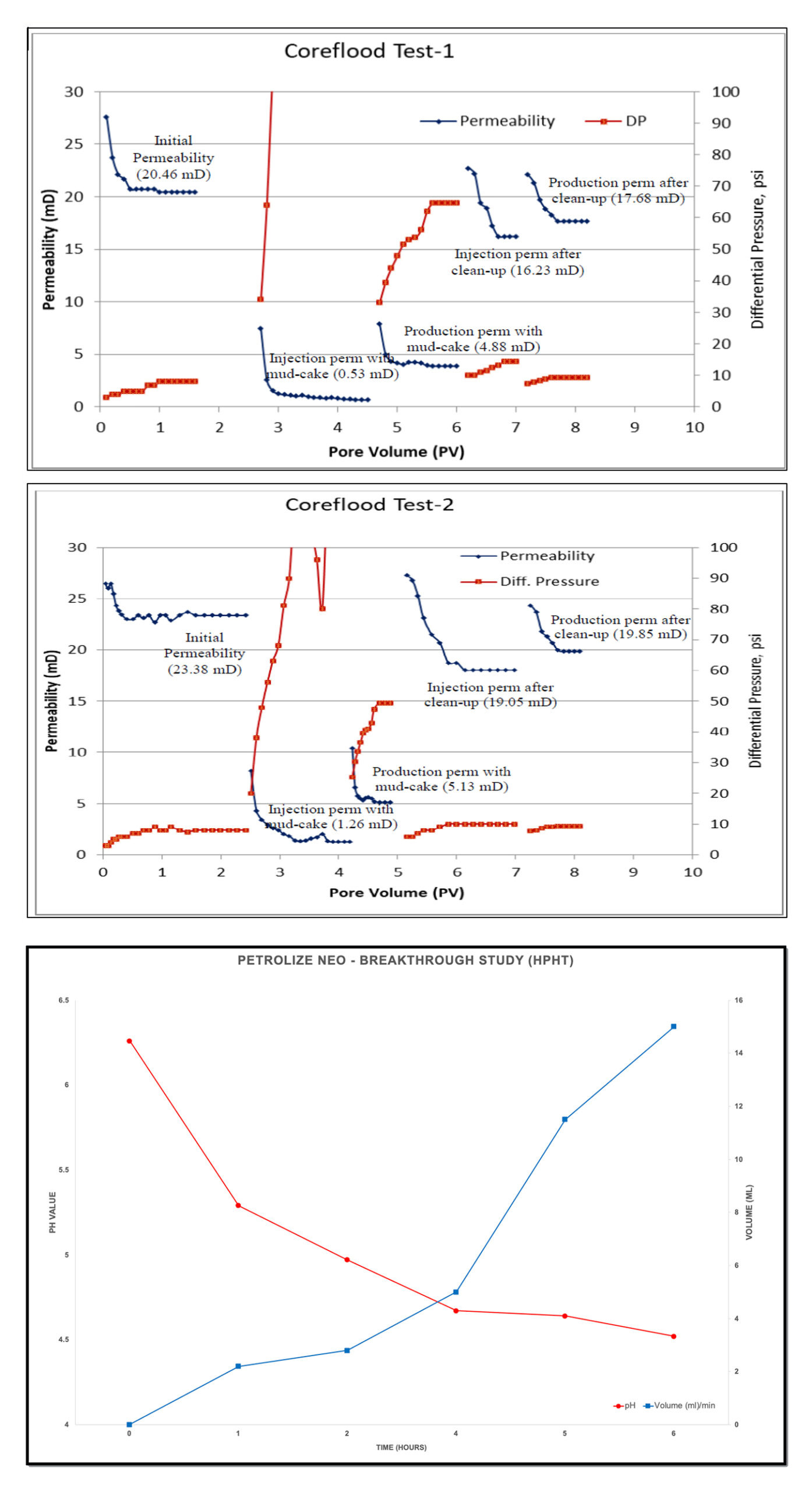


Name : PETROLIZE® NEO™
Description : Enzymatic Acid Precursor based, high performance Neutral pH biopolymer filter-cake breaker. PETROLIZE® NEO (US Patent: 20130231268A1) is a temperature-stable Hydrolase-Estrase enzyme with an enhanced acid-releasing precursor and anti-redeposition system. The product is suitable for removal of both water based and oil-based filter-cake deposited on wellbores formed by Reservoir Drill-in fluids. Reduces Acid Consumption in injection wells and increase production and safe for Downhole Tools & Well Completions. The product is suitable for removal of both water based and oil-based filter-cake deposited on wellbores formed by Reservoir Drill-in fluids. This product will work between borehole temperatures of 185°F to 302°F.
Name : Petrolize® BIO-SURFACTANT
Description : PETROLIZE™ BIO-SURFACTANT is a Non-ionic surfactant alkylpolyethylene glycol ether blended with Enzyme bio-systems to shorten the Lag Phase of Enzymatic Hydrolysis. This surfactant can be used, with or without a Hydrolyze Enzyme for Oil & Gas well applications. It is compatible with PETROLIZE Enzymes and non-ionic surfactants. It can also be used in combination with anionic and cationic surfactants. They do not react with calcium, magnesium or any of the other cations in hard water, nor with soluble alkali salts, anionic polymers such as carboxymethyl cellulose, or polycarboxylates.
Name : Petrolize® ENZYME BUFFER (BAA-B)
Description : A Buffer system For Starch-Xanthan & Cellulose Based Filtercake Enzyme Breakers In Oilfield Boreholes. It ensures the treatment solution a near neutral pH (5 - 6.5) during wellbore cleanup operations It is compatible with all Petrolize clean-up systems for broad range of biopolymers. The buffer systems will keep pH of an enzymatic complex solution constant by taking up the protons that are released during reactions, or by releasing protons when they are consumed. By acting as a proton regulator pump, Enzyme Buffer will prevent pH changes that might alter the biochemical activity of enzymatic hydrolysis.